
French, Historical Memory, and Algeria's Linguistic Future
By Naomi Pham
In Algeria, the debate over whether French should be replaced by English has become increasingly entangled with broader geopolitical and ideological tensions, often overshadowing the country’s actual linguistic and educational needs. In his discussion of Algeria’s “language question,” Algerian novelist and author Waciny Laredj rejects both the demonization of French and the uncritical glorification of English, arguing instead for a pragmatic, historically informed, and educationally sound approach to multilingualism.* French remains deeply embedded in Algerian society, from everyday communication to education and professional life, making its complete removal an enormous and potentially disruptive undertaking. At the same time, Laredj challenges narratives that portray French solely as a colonial legacy, pointing to moments in which the language played an important role in intellectual, political, and liberation movements. The question facing Algeria is not simply whether French should be replaced by English, but whether such a transition is practical, historically conscious, and genuinely beneficial to the country and future generations.
Catastrophe and the Failure of Reason in Modern Arab Societies
By Naomi Pham
Across the Middle East and North Africa, superstition has long coexisted with religion, folklore, and everyday life. Beliefs surrounding the evil eye, divine curses, unseen forces, and supernatural causes for misfortune continue to shape how many people interpret disasters and hardship. While these traditions have deep historical roots, Algerian novelist and thinker Amin Zaoui argues in his essay, “When Natural Disasters Become a Breeding Ground for Superstition,” published in Independent Arabia, that their continued prominence carries consequences extending far beyond personal belief -- that is, superstition is not merely a harmless cultural practice but a force that can discourage critical thinking, perpetuate social injustice, and provide political authorities with a convenient escape from accountability.
Lebanese people often say that just as Egypt is the gift of the Nile, Lebanon is the gift of the Litani. Rivers create the ideal conditions for the rise of great civilizations, a connection acknowledged since ancient times through the worship and reverence of rivers in Greece, Egypt, Mesopotamia, and across the wider world. From the creation of myths and the birth of numerous fertility deities to celebrations, festivals, and offering ceremonies, rivers have been central to the lives of the communities surrounding them. “As the presence of water is inextricably linked to the presence of life — and its absence to death — it is hardly surprising that rivers, waterways, and their basins have frequently ignited wars and bloody conflicts among humanity,” states Shawqi Bzeih in “The Litani River: Guardian of Memory and Legend, Ignored by Poets,” published in Asharq al-Awsat.
Public Art and the Preservation of Arab American History in New York
By Naomi Pham
Just in time for the closing of Arab American Heritage Month, French-Moroccan artist Sara Ouhaddou in collaboration with NYC Parks, the Washington Street Historical Society, the New York City Department of Cultural Affairs, and funding by the Mellon Foundation, unveiled a vibrant art installation on April 30 that not only celebrates the history of its surrounding area, but stands imbued with the hopes of preserving the community’s legacy for years to come. With its permanent home at the Elizabeth H. Berger Plaza in the Financial District, Ouhaddou’s sculpture and mosaic installation, nearly a decade in the making, honors the memory of Manhattan’s Little Syria, which was completely demolished and its residents evicted in the 1940s to make way for the construction of the Brooklyn-Battery Tunnel. The unveiling was also organized in conjunction with a symposium at NYU’s Kevorkian Center, titled “Beyond Al-Qalam: Literary Rebellion and Visual Abstraction in Little Syria,” held on May 2, 2026, exploring the legacy of New York’s early Arab American writers.
How Arabia's Tribes Created a Common Language Without a Common State
By Naomi Pham
Arabic in the pre-Islamic era — or Jahiliyyah, the ‘age of ignorance’ — was a diverse continuum of spoken dialects and poetic language rather than a single unified language. The period encompasses the history of the Arabian Peninsula and surrounding regions prior to the spread of Islam in 610 CE, a time characterized by nomadic Bedouin tribes and a rich oral poetry tradition. Mustafa Attia Juma’s essay, “The Reality of Arabic in the Pre-Islamic Era,” explores the deep history of the Arabic language and the conditions that determined its purity.
Southern Lebanon’s Christian Villages and the Fragile Politics of Neutrality
By
Elie Chalala
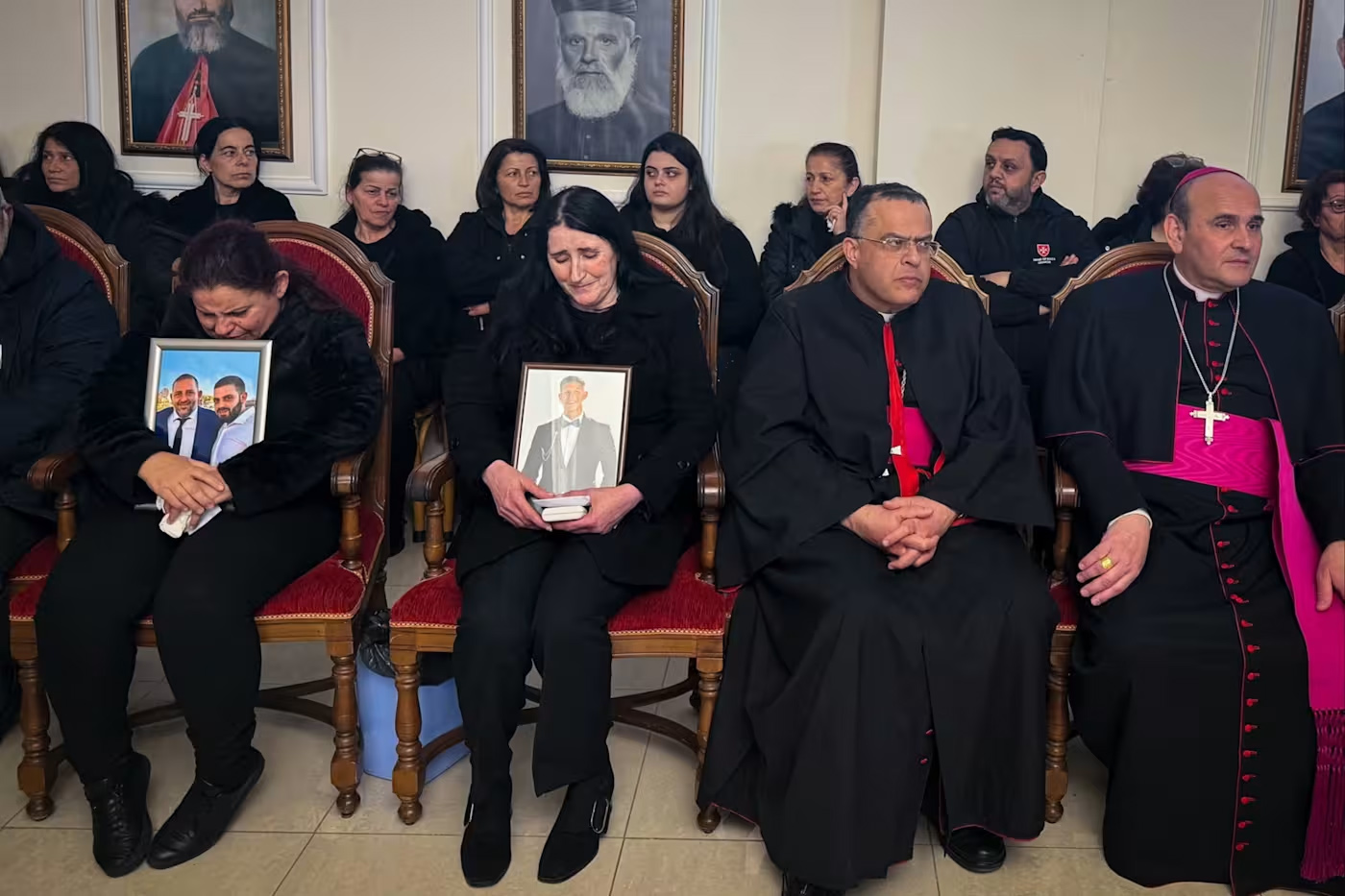
Witnessing the displacement of hundreds of thousands from their homes in Southern Lebanon, one cannot help but wonder what has steeled the resolve of those who choose to remain — why do the residents of Southern Lebanon’s Christian villages choose to stay, in spite of the looming dangers, rather than leave their homes for safety, as most Shiite civilians have done?
A prolific writer and leader of existential philosophy, Jean-Paul Sartre held a dominant position in 20th-century French intellectual life. Throughout his life, however, Sartre faced significant backlash — even danger — over his opinions.
The Syrian Ministry of Interior is reportedly following the case of a woman identifying herself as Walaa al-Mahmoud, whose story recently sparked media attention after she posted a video online accusing a security official in Jableh of abducting and assaulting her. She alleges that the security apparatus had colluded with the official by detaining her and facilitating the assault, as cited by Omar Qaddour in Al Modon*.
‘Ziyyah’ Transforms Village Ritual Into a Meditation on Memory, Coexistence, and the Recurring Wounds of Lebanon
By
Naomi Pham
Lebanese novelist and critic Mounir El Hayek’s novel “Ziyyah” (Al-Rafidain Publishing House, 2025) tells a story that transcends time — two time periods, separated by a century, yet facing similar tribulations. Set in a fictionalized version of the town of Qabb Elias, the author’s very own hometown, the characters’ lives unfold in a story that intertwines history with a twist of magical realism.
Trauma reshapes historical memory. People do not necessarily long for the past because it was ideal, but because the present became unbearable. Writers associated with Romanticism often imagined the past as spiritually richer or more authentic than industrial modernity. Postcolonial criticism often interrogates nostalgia, whether for empire, lost cosmopolitanism, or precolonial identities. Such topics are especially relevant to Algeria, Lebanon, Egypt, and Syria.
News surrounding the arrest of Algerian-French author Boualem Sansal in Algeria on November 16, 2024, was met with an outcry internationally as many protested against the detainment of the then-75-year-old writer, who was undergoing treatment for cancer.
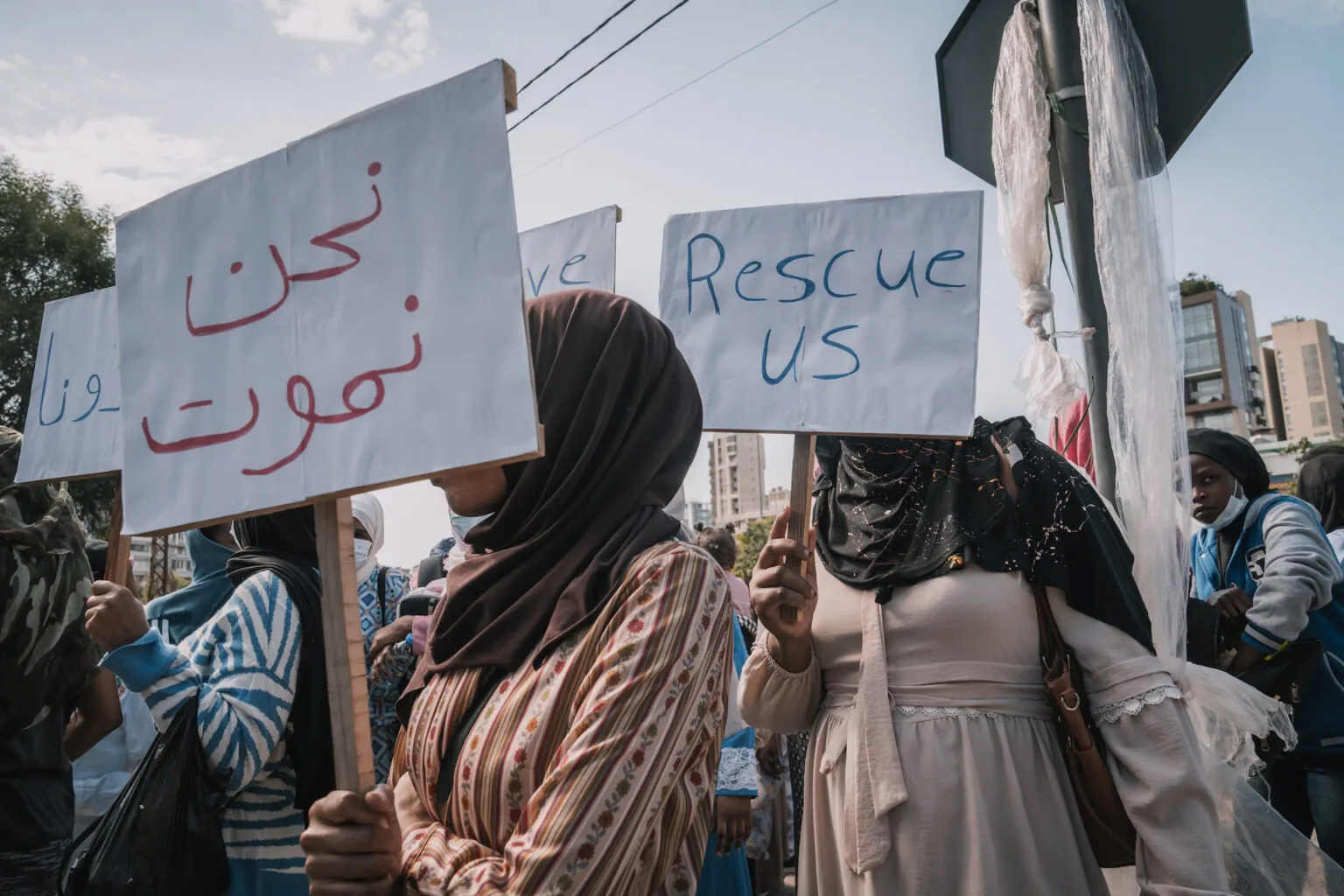
The current debate in Lebanon — following successive rounds of war between Hezbollah and Israel — centers on one of its most profound human costs: mass displacement. More than one million Lebanese have been internally displaced in a country already hosting approximately 1.5 million Syrians displaced by the protracted Syrian civil war.